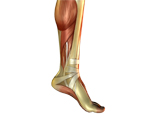





Arthroscopy of the Foot & Ankle
Arthroscopy of the foot and ankle
Technology and unique instrumentation have led to the development of surgical techniques for the diagnosis and repair of joint disorders.
Knee arthroscopy was developed in the late 1960’s. Small joint arthroscopy was developed in the early 1980’s by orthopedic and podiatric foot and ankle surgeons and adapted to foot and ankle joints. Your podiatric foot and ankle surgeon may identify a potential problem with a foot or ankle joint after examining the lower extremity. Arthroscopic surgery may be recommended to confirm a diagnosis or perform a surgical procedure within a joint using an arthroscopic instrument. For example, needle-like probe enter the joint through a small opening of the skin. The podiatric foot and ankle surgeon introduces a tiny camera to inspect the joint. The podiatric foot and ankle surgeon may also insert surgical instruments through another small incision to perform additional procedures within the joint.
Unlike traditional joint surgery that requires large incisions to expose the joint, arthroscopy uses small openings to examine the joint. By eliminating the need for large incisions, arthroscopy reduces the risk of infection and swelling. Podiatric foot and ankle surgeons may perform arthroscopic surgery in hospitals, outpatient surgery centers and in their offices. Arthroscopy is often a “same day” procedure allowing the patient to return home after surgery. Your podiatric foot and ankle surgeon will discuss all aspects of surgery with you.
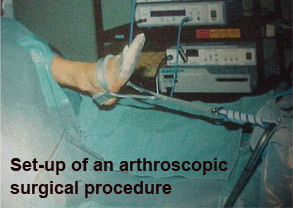
Instrumentation
Podiatric foot and ankle surgeons use delicate instruments and miniature video cameras to perform arthroscopic surgery. These instruments include cutting tools, burrs, graspers, shavers, fastening tools, sutures, laser and electrocautery to control bleeding.
Arthroscopic surgery
Arthroscopic techniques allow for a variety of procedures that are performed on the foot and ankle joints. The following list reflects conditions for which the arthroscope can be used to diagnose and perform reconstructive procedures:
- Chronic ankle pain
- Arthritis
- Loose bodies
- Ankle instability (feeling of giving way)
- Cartilage fractures
- Chondromalacia cartilage
- Meniscoid body (scar tissue)
Advantages of arthroscopic surgery include reduced trauma due to the small instruments used. Small instruments cause less damage to surrounding skin, ligaments, tendons, and bony structures. Movement of the joint reduces swelling, stiffness, and postoperative discomfort. Your podiatric foot and ankle surgeon may recommend exercising the joint to hasten your recovery to bathing, walking, and sports activity.
Postoperative care
Your podiatric foot and ankle surgeon may recommend rest, ice, compression, and elevation (RICE) to help speed healing.
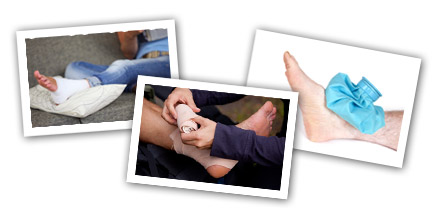
Rest
Ask your podiatric foot and ankle surgeon how long you should rest or restrict activity
Ice
Ice reduces swelling, bleeding, and pain following surgery
Compression
Dressings help reduce swelling and stabilize the joint, preventing unnecessary motion. Dressings should be snug but should not interfere with proper circulation
Elevation
Keep the foot at or above the level of the heart to drain excess fluids away from your foot. This helps to reduce swelling and discomfort