



Athletes Foot
Athlete’s Foot
Athlete’s foot represents a fungal infection of the skin that can cause redness, itching, and flaking/scaling of the skin. It is fairly common – about 70% of the population will suffer from Athlete’s Foot in their lifetime. This type of infection is usually contracted in an area where people walk barefoot such as a health club or swimming pool. This condition can also develop from excess moisture that builds up in a person’s shoe.

There are three main types of athlete’s foot that occur. The first two types are the most common and the last is the least common to contract. The first type causes redness and scaling of skin on the bottom of the foot and is called moccasin distribution athlete’s foot. The second type-toe web infection (Tinea-pedis) occurs between the toes and causes macerated white skin to develop. The third type which is the least common is vesicular infection and it begins with a sudden outbreak of many fluid-filled blisters under the skin on the bottom of the foot. These blisters are painful to walk on and my burst when walking.
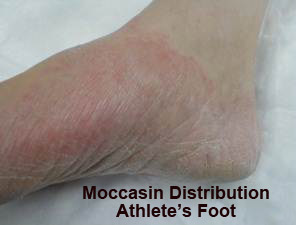
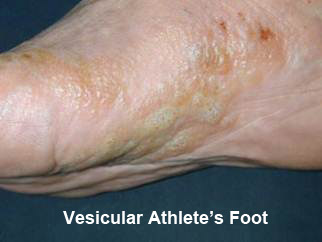
Some peoples do not have any symptoms while others might have skin that becomes wet or dry with redness, itching and burning. Timely treatment of this condition is important because dry/cracked and blistered skin can lead to fissures and breaks in the skin which can then cause secondary bacterial infections requiring antibiotic therapy.
Proper diagnosis of this condition is traditionally performed by your podiatrist after his review of the clinical findings. Sometimes, however, this condition mimics other skin conditions such as dermatitis, psoriasis, or lichen planus. In these instances, your podiatric physician may perform a KOH (potassium hydroxide) test to help make a definitive diagnosis. This type of testing requires your podiatrist to take a sample of the affected skin to determine if the infection is present.
Treatment of athlete’s foot usually begins with topical creams, sprays, gels or ointments. If this type of therapy fails, the next step in treatment is an oral anti-fungal medication.